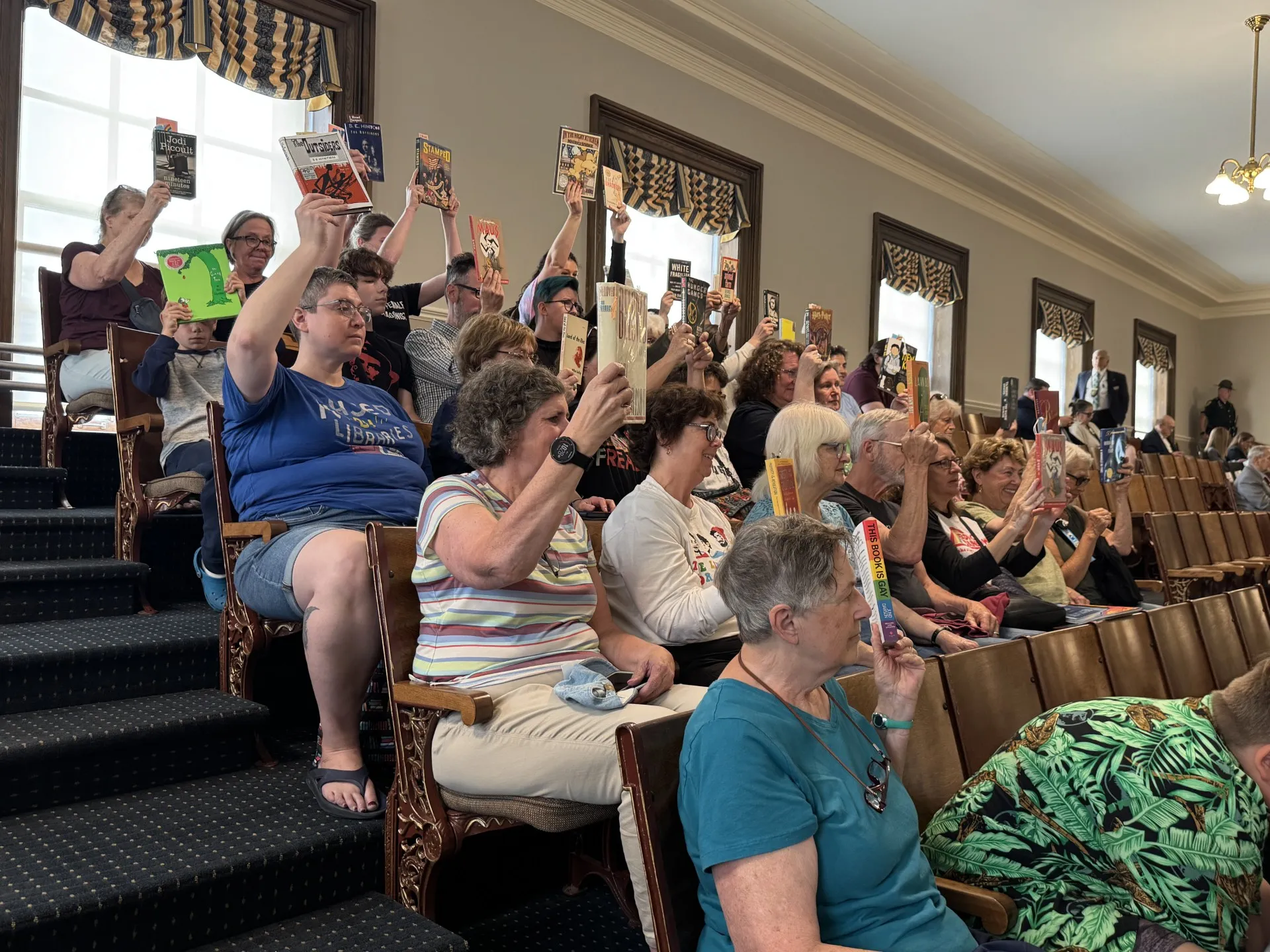
CONCORD, NH - On May 14, 2026, the New Hampshire House voted 188-161 to pass SB 434 with amendment #1937h. As amended, SB 434 would require school boards to adopt and post a policy for addressing complaints against public school materials alleged to be “harmful to minors.” The bill next goes back to the Senate for a vote to concur or non-concur or request a Committee of Conference. Often framed as a school library bill, SB 434 reaches far beyond library shelves. The bill’s definition of “materials” includes books and printed items, web content and videos, artwork and performances and other materials presented in schools.
Supporters of strong public schools note SB 434 is unnecessary and undermines local control. New Hampshire districts already have reconsideration policies approved by elected school boards, and parents already have options to guide their own child’s learning, including opting out of course materials they object to. Granite Staters support local decision-making: a March 2025 Granite State Poll by the University of New Hampshire Survey Center found that 56% of voters believe that local decision makers, like school boards, should set library and curriculum policies, not state politicians.
Last session, Governor Kelly Ayotte vetoed a similar bill and warned the state should not be in the business of deciding “literary value and appropriateness,” especially using subjective standards that invite costly legal fights and override local decision-making. SB 434 raises many of the same concerns and would impose a statewide mandate on local communities. Advocates urge the Governor to veto SB 434 and keep New Hampshire focused on supporting kids’ learning and reading, not manufactured political fights that could drag schools and taxpayers into years of legal battles.
Parents, school leaders, and civil rights groups gave the following statements:
“This bill will alarm schools and confuse teachers for a prohibition that is already covered by state law. Schools have these policies in place already,” said Jacquelyn Benson, NH Regional Leader, Authors Against Book Bans
Megan Tuttle, President, NEA-New Hampshire, stated, “Educators and local communities–not politicians in Concord–are best positioned to make decisions about what students learn and the resources available in their schools. Unfortunately, SB 434 is yet another attempt to censor classrooms based on the political agenda of a vocal minority. This out-of-touch and unnecessary legislation jeopardizes students' rights to an inclusive, high-quality public education.”
Deb Howes, President of American Federation of Teachers - NH, said, “Once again, extremist politicians in the NH House have betrayed Granite State public school students by passing SB 434. The bill strips students of their right to read freely and learn from a full range of ideas in their public schools. It hands censorship power to a single complainant and forces books and lessons out of classrooms, lowering the quality and honesty of education for everyone. It also puts teachers in an impossible position, where fear of punishment replaces professional judgment and doing right by students.”
“New Hampshire families have been asking for solutions on school funding, health care, housing, child care, the cost of living, and more. Meanwhile, our lawmakers have spent an extraordinary amount of time on unnecessary bills like SB 434, even though local processes and existing laws already address truly obscene material” said MacKenzie Nicholson, Senior Director, MomsRising New Hampshire. “Governor Ayotte, we’re asking you to put your veto pen to paper again. Stand up for local control and our kids’ freedom to read and learn. Veto SB 434.”
Christina Pretorius, Education Justice Campaign Director, Engage NH, said, “Every student should have the freedom to read and learn, and to have a sense of belonging in our schools and community. SB 434 allows a small group of politically motivated individuals to harm the honest, inclusive education of entire classrooms and schools. As a parent and as a public school advocate, this is not how policies in our schools should be shaped.”
John Chrastka, Executive Director, EveryLibrary, said, “The version of SB434 that passed the House today is a “you can’t have it both ways” moment for the legislature. The Miller Test for obscenity has been the legal standard set by the Supreme Court for over 50 years. The modifications passed today would weaken the rights that all New Hampshire citizens, especially parents and students, currently enjoy. Either we see the rule of law applied fairly and consistently across the state or we let political actors and special interests rewrite the First Amendment county by county. This is not a smart way to create education policy and the quality of local learning will inevitably suffer.”
Philomena Polefrone, Associate Director of Advocacy, American Booksellers Association, “This bill seeks to solve a problem that doesn’t exist, and it does so with redundant, unnecessary measures. All it will do is confuse an issue that is confused enough. Let’s put an end to this divisive attempt to censor literature and let Granite State kids get back to their books.”
Aimee Terravechia, Executive Director of 603 Equality, said, “SB434 is a censorship bill, through and through. SB434 creates a culture of censorship. SB434 would cultivate an environment where students and families could have materials that represent their identities, beliefs, and experiences removed, wholesale. We will continue to fight this and any other materials bans that erode a student’s rights.”
Amanda Azad, Policy Director at the ACLU of New Hampshire, said, “New Hampshire schools should be places of learning, not censorship—but for the third year in a row, state lawmakers want to create avenues to ban books. School districts already have local processes in place to address book challenges. The procedures established by this bill will create a chilling effect for teachers, supersede local control, and impose statewide regulations that would apply to books, instructional materials, classroom content, performances, visual materials, and more."