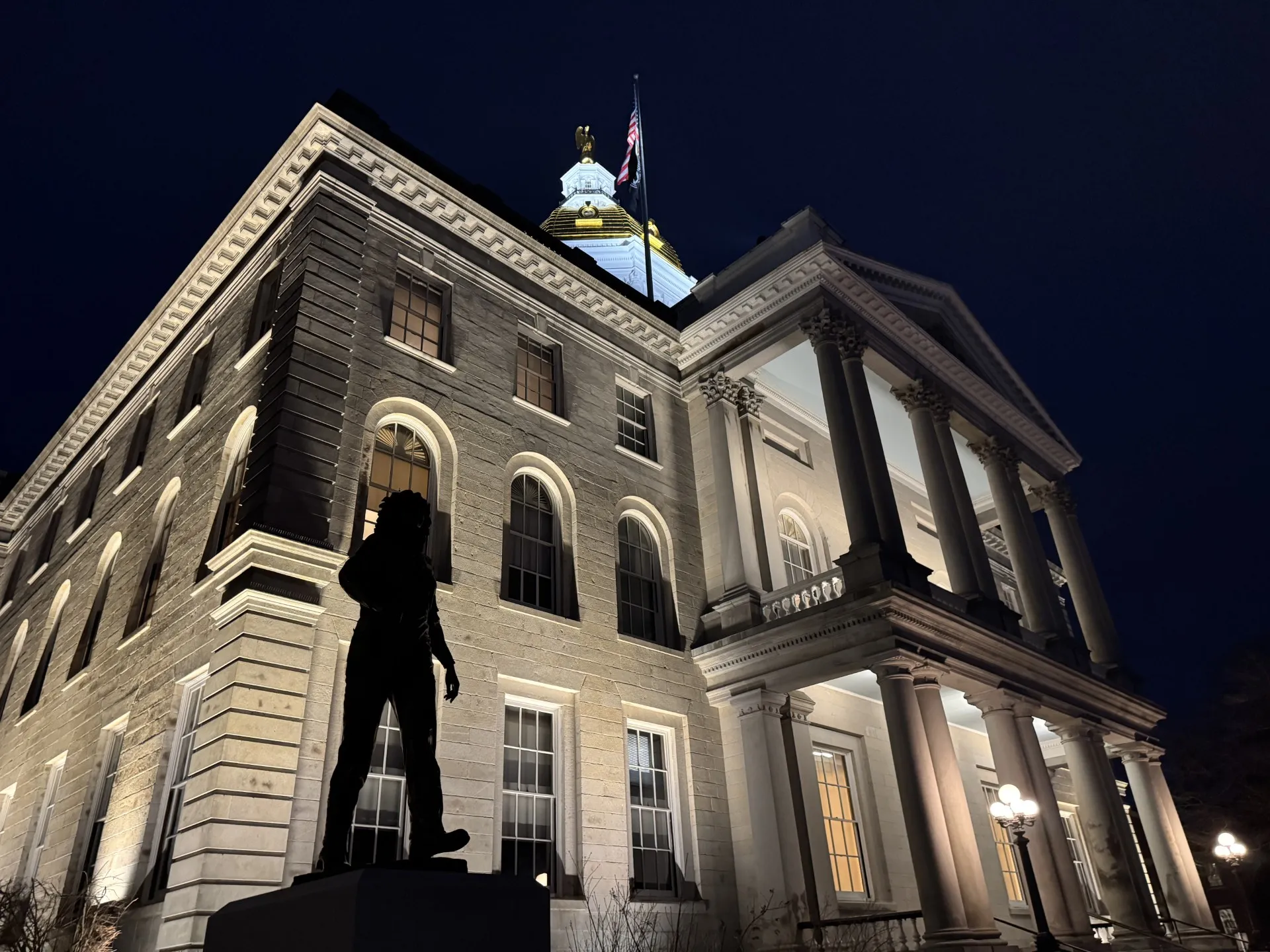
CONCORD, NH – On Wednesday, the New Hampshire House voted 177-159 to Indefinitely Postpone HB 1704, the latest union busting bill proposed by anti-labor lawmakers who want to weaken workers’ rights and collective bargaining.
After the vote on HB 1704, labor group leaders issued the following statements:
"Once again, a bipartisan coalition of our elected representatives put their constituents before out-of-state corporate special interest groups and sent HB 1704-FN to the legislative trashcan. I want to thank those legislators who stood in Solidarity with us in the face of intense political pressure. No one asked for this bill. Not a single mayor, town administrator, or superintendent supported HB 1704-FN. From the start, this model bill from the American Legislative Exchange Council (“ALEC”) was overwhelmingly opposed by the public, public employers, and the public employees that the bill’s supporters claimed it would benefit. Despite nefarious procedural machinations by Republican House Leadership, and fake statistics and lies from the bill’s Prime Sponsor about the nature of collective bargaining, a majority of House members stood up for the best interests of the workers they were elected to represent,” said Glenn Brackett, New Hampshire AFL-CIO President.
Megan Tuttle, President of NEA-New Hampshire, stated: "As educators, our union membership and collective bargaining rights ensure we have a real voice in the decisions that affect our classrooms, students, workload, and professional lives. Let’s be clear–efforts to weaken our collective bargaining rights, like HB 1704, are efforts to silence educators. History shows that when workers’ rights are rolled back, working conditions decline–and students pay the price. We applaud the bipartisan lawmakers who stood in solidarity with New Hampshire workers to reject HB 1704."
Deb Howes, President of AFT-NH said, "AFT-NH is gratified that the New Hampshire House defeated HB 1704, stopping a reckless bill that would have driven up costs and destabilized our public schools and towns. Lawmakers wisely rejected a scheme that would have forced employees to bargain alone, buried districts in paperwork, and threatened basic rights to speak up for fair treatment. This vote protects the voices of teachers and paraeducators and keeps our public schools strong for every Granite State student.”
Rich Gulla, SEA/SEIU Local 1984 President, added, “I want to repeat what I wrote for the NH Journal: if we want to recruit and retain the best people, the solution is straightforward—but not easy: pay competitively, staff adequately, and support frontline workers. HB 1704 was never about addressing our workforce issues. It is about outside money coming into New Hampshire and influencing our politics and that needs to end.”
“HB 1704-FN would have weakened worker protections, increased costs, created workplace chaos, and undermined the ability of our membership to do their jobs, serving the people of New Hampshire. We are thankful to the bipartisan coalition of legislators who put the interests of our workers and communities before the interests of out-of-state special interest groups,” said Richard Laughton, Teamsters Local 633 Business Agent.
“This victory is a strong example of the strength of organized labor and proves that when we remain united, we can overcome any challenge,” said AFSCME Council 93 Director Mark Bernard, whose union represents over 4000 county and municipal employees in New Hampshire. “It also proves that despite deep political divisions in our country, Democrats and Republicans can still work together. We applaud members of the New Hampshire House of Representatives for working across party lines to defeat this latest attempt to weaken our labor movement and we are grateful to the New Hampshire AFL-CIO for leading this successful effort.”
Background Information:
- HB 1704 Undermines Exclusive Representation – the Core of Collective Bargaining: Exclusive representation is the legal foundation of collective bargaining. Allowing individuals to opt out fractures bargaining units, drains union resources, and replicates the core effect of Right-to-Work laws: benefit from union contracts without supporting the union.
- The bill explicitly allows individual bargaining outside the union: “Independent bargaining” shall mean negotiating with a public employer… without intervention of an employee organization
- This directly weakens the legally certified exclusive representative: “Exclusive bargaining representative” shall mean any employee organization certified…
- Under HB 1704, Employees Can Opt Out of Union Representation While Keeping Benefits: This creates free riders—employees who benefit from union-negotiated wages, healthcare, and job protections without contributing. This mirrors Right-to-Work laws, which weaken unions by starving them financially.
- The bill prohibits contracts from requiring representation: “No agreement… may require employees who opt for independent bargaining to be represented by a union”
- HB 1704 Bans Union Influence Over Individual Grievances: This bill removes union protections during disciplinary processes. Without trained union reps: workers are more vulnerable to retaliation; due process is weakened; and employers gain leverage over isolated employees. This dismantles collective enforcement of workplace rights—another hallmark of Right-to-Work systems.
- The bill states: “No collective bargaining agreement may limit an employee's ability to negotiate or adjust grievances directly”
- HB 1704 Creates Administrative Chaos: Collective bargaining is efficient. This bill replaces one table with hundreds, increasing HR costs and legal exposure.
- Under HB 1704, employers must:
- Negotiate hundreds of thousands of individual contracts
- Track different pay scales, benefits, and grievance procedures
- Manage legal risk from inconsistent agreements
- Under HB 1704, employers must:
- HB 1704 Exposes Employers to Discrimination Lawsuits: Ironically, unions protect employers by standardizing contracts.
- When individuals negotiate separately two workers doing the same job may earn different pay and benefits and conditions will vary arbitrarily.
- This creates massive exposure to:
- Pay equity lawsuits
- Discrimination claims
- Favoritism allegations
- HB 1704 Criminalizes Normal Labor Activity: This is unprecedented. Under HB 1704, public employees could be forced into criminal investigations, routine labor disputes become law enforcement matters, and labor relations statewide will be destabilized.
- The bill makes violations a Class A misdemeanor: “Violations… are a class A misdemeanor”
- It also criminalizes traditional labor activity making constitutionally protected speech/activity illegal: “Any strike, picketing, boycott… intended to induce prohibited agreements is illegal”
- HB 1704 Forces Employers to Break Existing Labor Agreements: This forces employers to: renegotiate contracts midstream; risk breach-of-contract litigation; and lose labor peace stability.
- The bill voids agreements: “Any agreement… violating employee rights under this section is unlawful, null, and void”
###