Key Takeaways
- Conversations about book access can become emotional - quickly. Clear definitions help us understand what is happening.
- There is a meaningful difference between a family deciding that a book is not right for their child and a decision that makes that book unavailable to other families.
- We need room to discuss both individual concerns and the broader consequences of restricting access. That means listening carefully, reviewing a work in context, and using clear, consistent selection and reconsideration procedures.
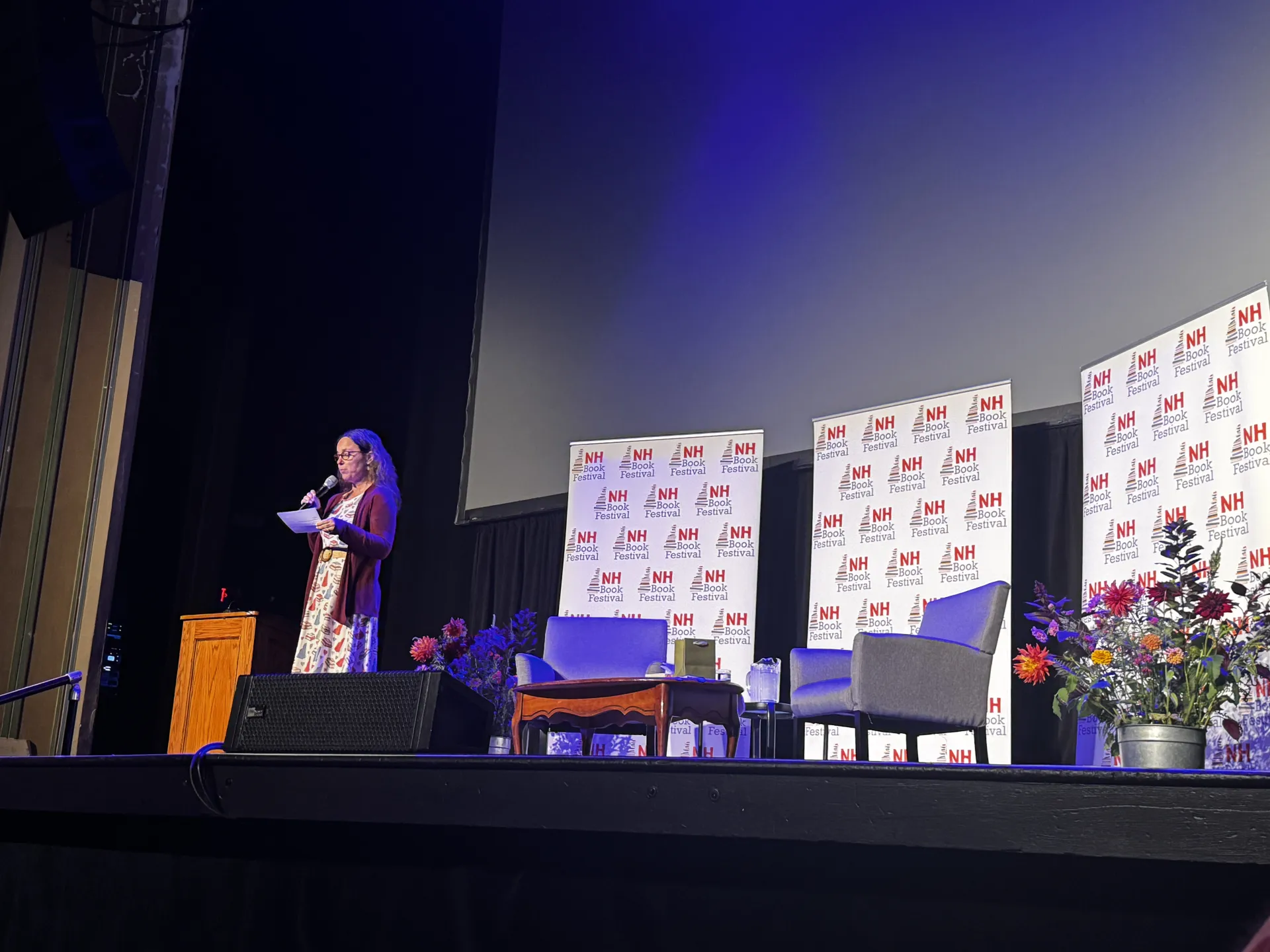
Recently, I had the incredible opportunity to speak at the New Hampshire Book Festival on behalf of United Against Book Bans. I'm grateful to Jodi Picoult and the American Library Association for the opportunity to talk about something central to my work as a school librarian: the freedom to read.
Speaking in front of a packed theater is well outside my comfort zone, and I hadn’t expected the audience to cheer…. A lot. Their response caught me off guard, and those few minutes remain a blur! But as I walked offstage, I took a deep breath, thanked Jodi, and managed a selfie I will keep forever!
But what stayed with me came later: emails, texts, and even a handwritten note accompanied by a potted plant. People took time to tell me the message mattered.
That encouragement reinforced something worth remembering in our schools: speaking up can make a difference, even when we feel nervous doing it.
Understanding the numbers
Conversations about book access can become emotional - quickly. Clear definitions help us understand what is happening.
The American Library Association distinguishes between a challenge, an effort to remove or restrict a resource because of objections, and a ban, when materials are removed in response to those objections. A challenge does not automatically result in a ban.
According to ALA’s 2025 censorship data:
- 4,235 unique titles were challenged, the second-highest annual total ALA has recorded, just below 4,240 in 2023.
- 5,668 book bans were documented, representing 66% of the books challenged in its records.
- Another 920 books faced access restrictions, such as relocation or parental-permission requirements.
- 1,671 unique challenged titles represented LGBTQIA+ experiences or those of people of color, approximately 39% of the total.
These figures use different measures: a unique title is counted once in that category, while the same title can be targeted in multiple places. They should not be read as 5,668 different titles banned out of 4,235 different titles challenged. ALA also cautions that its reporting captures only part of the picture because many incidents go unreported. For educators, these numbers raise practical questions about how librarians select materials, respond to concerns, and preserve students' opportunities to read.
Taking concerns seriously while considering every reader
In my career, I have navigated a book challenge, served as New Hampshire's Intellectual Freedom Chair, and continue to support colleagues through the state's Intellectual Freedom Hotline. These experiences have taught me that disagreements about books happen within communities people care deeply about. Families bring different beliefs, experiences, and expectations.
Concerns about age appropriateness deserve thoughtful responses.
I don’t expect every book to be right for every student. Helping readers find materials that fit their interests, needs, and readiness is part of my job.
There is also a meaningful difference between a family deciding that a book is not right for their child and a decision that makes that book unavailable to other families.
We need room to discuss both individual concerns and the broader consequences of restricting access. That means listening carefully, reviewing a work in context, and using clear, consistent selection and reconsideration procedures.
It also means remembering those who may never speak at a meeting:
- The reader who recognizes their family in a story.
- The reader finding words for something they are experiencing.
- The reader encountering a life or perspective different from their own.
Their needs belong in the conversation, too.
What a place on the shelf means
Putting a book on a library shelf does not mean endorsing every idea inside it. It creates an opportunity for readers to examine, question, and discuss those ideas.
As educators and librarians, we help students practice that work: evaluating information, considering context, weighing perspectives, and forming their own conclusions.
To me, the freedom to read includes protecting someone else’s opportunity to choose a book I would not choose myself.
It also carries a message about belonging. I want students entering a library to know there is room for their questions, their experiences, and their stories.
Small ways to support thoughtful conversations
Supporting readers does not require a microphone or a packed theater. It can begin with everyday professional practice:
- Know your school’s policies. Understand how materials are selected and how concerns are reviewed.
- Build relationships with families. Invite questions and explain how you help students make reading choices.
- Read beyond an excerpt. Consider the complete work, its intended audience, and its educational or literary purpose.
- Support colleagues. A private check-in or a thoughtful public comment can help someone feel less alone.
- Explore practical resources. United Against Book Bans offers an Action Toolkit and Conversations That Connect guide for people interested in supporting the freedom to read.
I left the New Hampshire Book Festival grateful for the opportunity and for the people who reminded me that this work is shared.
We don’t have to agree about every book to approach one another with care. We can take families’ concerns seriously while keeping the needs of a diverse community of readers in view.
Libraries should be places where everyone feels welcome, and every reader belongs. Keeping them that way is a responsibility we all share.
With over 15 years of experience as a certified School Librarian and Digital Learning Specialist, Jessie Gilcreast is passionate about creating and sustaining a culture of reading, inquiry, and collaboration in educational settings. She currently works as a School Librarian at Bedford High School. In 2019, Gilcreast was named the School Librarian of the Year by the New Hampshire School Library Media Association.