Key Takeaways
- Ballot Question 2 is a one-size-fits-all school funding cap that undermines local decision making and will make it harder for community public schools to meet the needs of every student.
- The choice on Question 2 is about more than spending limits. A “yes” vote on Question 2 risks fewer educators in our schools, larger class sizes, and less opportunity for students. A “no” vote on Question 2 preserves local control and allows communities to make informed decisions about how to best educate their children.
- The real issue is that the State of New Hampshire fails to fund public schools adequately. The State pays only 17 cents of every dollar spent on public education in NH—the lowest state contribution in the country. If politicians really wanted to reduce property taxes, they would pass real school funding reform.
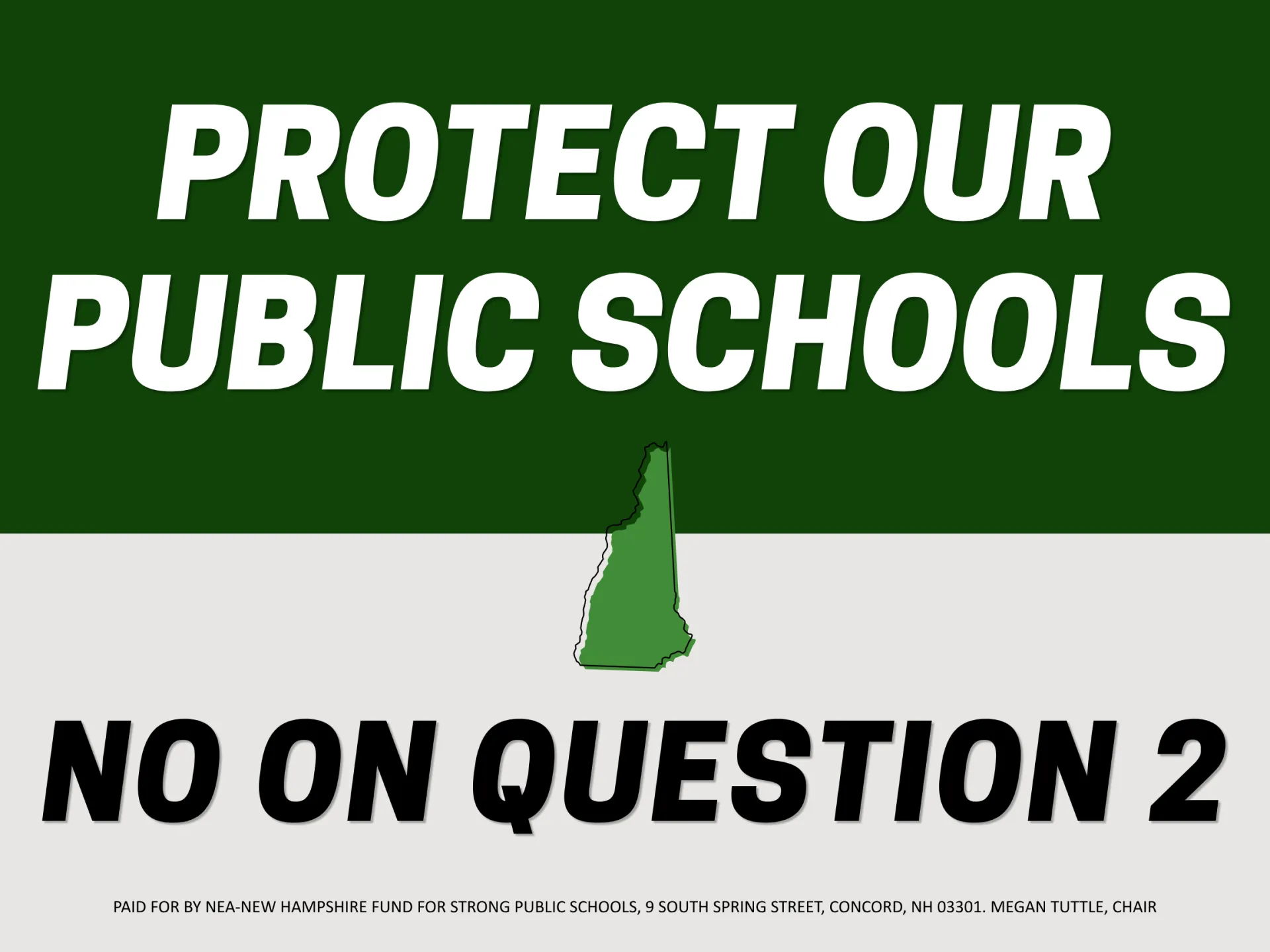
On November 3, every Granite State voter will vote on “Question 2” - a one-size-fits-all school funding cap that will lead to millions of dollars in public school cuts across the state.
Question 2 ties funding caps to inflation, but we know required costs, like utilities and special education, are rising faster than inflation. When fixed costs rise but the budget can’t, districts are forced to cut sports, arts, music, theater, AP classes, classroom supplies, and teachers. That means larger class sizes and fewer opportunities for student achievement.
In New Hampshire, these programs may not be considered legally necessary to provide an “adequate” education. But ask any parent, teacher, or student, and you’ll hear what the law fails to capture: These are the opportunities that engage students, nurture their talents, and help them grow into well-rounded adults.
Question 2 isn’t just about a number on a spreadsheet. It’s about what our schools can offer our children–and who will be left to teach them.
New Hampshire is already last in the nation when it comes to state funding for our public schools. The State pays only 17 cents of every dollar spent on public education in NH, forcing property taxpayers to pick up the tab. If politicians really wanted to reduce property taxes, they would pass real school funding reform. Instead, they put Question 2 on our November ballots.
Families across New Hampshire–including educators–are feeling the squeeze as the cost of living rises. School districts face the same pressures. But an arbitrary funding cap tied to inflation won’t make rising expenses disappear. It will simply force districts to make difficult choices about what they can afford.
The choice on Question 2 is about more than spending limits. A “yes” vote on Question 2 risks fewer educators in our schools, larger class sizes, and less opportunity for students. A “no” vote on Question 2 preserves local control and allows communities to make informed decisions about how to best educate their children.
Every Granite State student deserves a high-quality public education, safe and welcoming schools, and the support they need to thrive - regardless of their zip code. On November 3, vote NO on Question 2!
Additional Resources
- NEA-NH: Protect Public Schools; Vote NO on Question 2 One-Pager
- NEA-NH President Megan Tuttle Op-Ed: Question 2 School Funding Caps Will Exacerbate Teacher Shortage, Impact Classrooms and Students
- New Hampshire Has Issues: Podcast - Question 2: The end of your NH November ballot
- Reaching Higher NH: Question 2 - HB 1300 On the Ballot FAQ
- Reaching Higher NH: Everything You Need to Know About School District Tax Caps (includes details on existing school funding caps)
- NH Fiscal Policy Institute: How Education Funding is Paid For and Calculated in New Hampshire
- NH School Funding Fairness Project: How School Funding Works in New Hampshire
- NH School Funding Fairness Project: See How Much Funding Your Town Lost Out in State Budget
- NH School Funding Fairness Project: “School Funding + Property Taxes: 10 County Tour”
