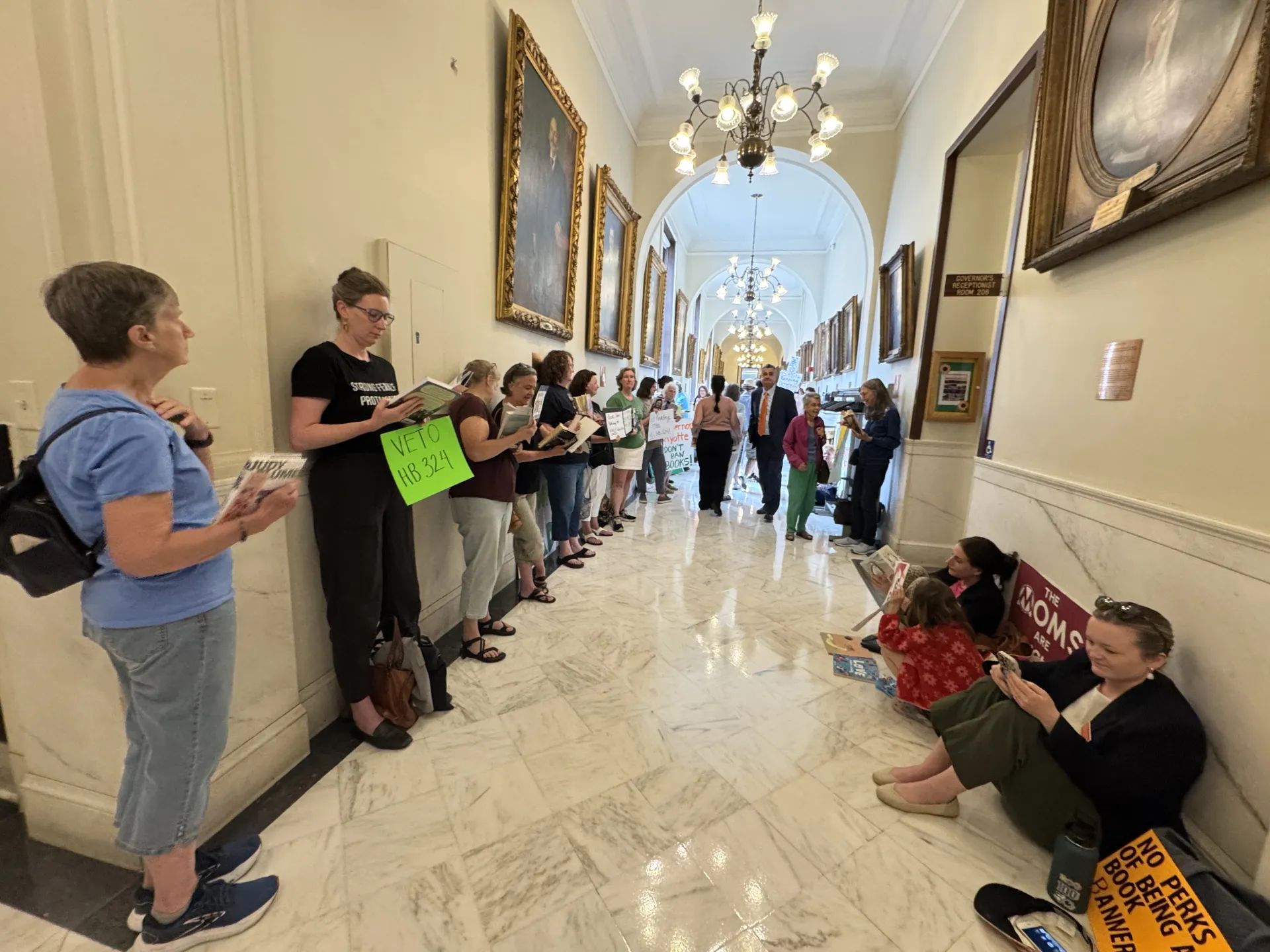
CONCORD, NH - On May 4, 2026, the House Education Policy and Administration committee of the New Hampshire House of Representatives voted 10-8 to pass an amended version of SB 434, a bill that would require every school district to adopt and publicly post a new policy for addressing complaints about public school materials alleged to be “harmful to minors” or “age inappropriate.” The bill passed through the Senate in February and now heads to the full House of Representatives. Often framed as a school library bill, SB 434 reaches far beyond library shelves. The bill’s definition of “materials” includes books and printed items, web content and videos, artwork and performances, and even guest speakers and presentations.
Supporters of strong public schools note SB 434 is unnecessary and could be used to target books and materials that reflect different families and lived experiences. New Hampshire districts already have reconsideration policies approved by elected school boards, and parents already have options to guide their own child’s learning, including opting out of course materials they object to. Granite Staters support local decision-making: a March 2025 Granite State Poll by the University of New Hampshire Survey Center found that 56% of voters believe that local decision makers, like school boards, should set library and curriculum policies, not state politicians.
Last session, Governor Kelly Ayotte vetoed a similar bill and warned the state should not be in the business of deciding “literary value and appropriateness,” especially using subjective standards that invite costly legal fights and override local decision-making. SB 434 raises many of the same concerns by relying on an undefined “age inappropriate” standard and goes even further in scope by creating a broad statewide mandate that will be applied differently from district to district. Advocates urge the New Hampshire House of Representatives to reject SB 434 and keep New Hampshire focused on supporting kids’ learning and reading, not manufactured political fights that could drag schools and taxpayers into years of legal battles.
Parents, school leaders, and civil rights groups gave the following statements:
“New Hampshire already has laws in place to prevent kids from accessing obscene material and to protect parental rights. So why SB 434? Because it’s a blunt instrument that will facilitate book bans throughout New Hampshire’s schools. The Granite State needs to say no to this bill,” said Jacquelyn Benson, NH Regional Leader, Authors Against Book Bans
Megan Tuttle, President, NEA-New Hampshire, added, “Educators and local communities–not politicians in Concord–are best positioned to make decisions about what students learn and the resources available in their schools. Unfortunately, SB 434 is yet another attempt to censor classrooms based on the political agenda of a vocal minority. We urge the New Hampshire Senate to protect students’ right to an inclusive, high-quality public education by rejecting this out-of-touch and unnecessary legislation.”
Deb Howes, President of American Federation of Teachers - NH, said, “Once again, the majority on the House Education Policy Committee is putting the rights of some parents to complain ahead of the rights of all public school children to learn. By passing SB 434, the committee is putting real limits on students’ right to read, learn, and explore a broad range of ideas in their public schools. By expanding censorship and allowing a small number of complaints to drive the removal of books or instructional materials, this bill undermines educational quality and honesty. It also creates a chilling effect that pressures teachers to self-censor rather than do their jobs in the best interests of their students, free from fear of punishment.”
“This bill is an embarrassing distraction from what New Hampshire families actually need,” said MacKenzie Nicholson, Senior Director, MomsRising New Hampshire. “We’re dealing with out-of-control child care costs, schools that need real support and property taxes pushing families out of their homes. SB 434 goes far beyond library books and would allow challenges to everything from plays and artwork to guest speakers and classroom materials. We urge the House to stop this and stand up for our kids’ freedom to read and learn.”
Christina Pretorius, Education Justice Campaign Director, Engage NH, said, “Every student should have the freedom to read and learn, and to have a sense of belonging in our schools and community. SB 434 allows a small group of politically motivated individuals to harm the honest, inclusive education of entire classrooms and schools. As a parent and as a public school advocate, this is not how policies in our schools should be shaped.”
John Chrastka, Executive Director, EveryLibrary, said, “I hope the House understands that SB434 would allow materials challenges from politically motivated and narrowly interested individuals on nearly everything in any school or district. SB434 will go far beyond school libraries to include plays, dances, statues, pamphlets, phonographic records, and “any printed material”. School boards and administrators across the state should be opposing this kind of poorly built education policy.”
Philomena Polefrone, Associate Director of Advocacy, American Booksellers Association, “The New Hampshire legislature has once again passed a bill nearly identical to one that has already been vetoed, contains provisions disliked by a majority of Granite Staters, and would lessen young readers’ access to books statewide. On behalf of our New Hampshire members, ABA asks Governor Ayotte to veto this bill for a second time if it makes it to her desk.”
Aimee Terravechia, Executive Director of 603 Equality, said, “SB434 is a censorship bill, through and through. It gives outsized privileges to a single person within the school district to restrict access to materials for all students and families. Mechanisms already exist for parents to limit their family’s access and exposure to materials they disagree with. What SB434 does is create a culture of censorship and an environment where students and families could have materials that represent their identities, beliefs, and experiences removed, wholesale. We will continue to fight this and any other materials bans that erode a student’s rights.
Rachel Potter, Policy Associate at the ACLU of New Hampshire, said, “Banning books is a violation of our First Amendment rights and the free exchange of ideas that our democracy depends on. SB 434 would create viewpoint-based censorship by using vague standards to strip classrooms of diverse perspectives, create a chilling effect for educators across NH, and make it easier for one parent to ban books, art, and material in classrooms and school libraries across the Granite State. Classroom censorship goes against our Granite State values, and we urge the House to reject this latest attempt.”